September 30, 2026
Why Modular Construction Is Becoming Critical to the Future of the Construction Industry
The construction industry is evolving rapidly, with a growing focus on delivering projects with greater efficiency, consistency and precision while responding to increasingly complex project requirements. As the sector embraces new technologies and more industrialised approaches, modular construction is emerging as an important solution for improving how construction components are designed, manufactured and delivered.
Unlike conventional construction methods, modular construction enables complete units to be manufactured in a controlled off-site environment before being transported to site for installation. This approach can shift a significant portion of construction activity from the project site to a dedicated manufacturing facility, allowing fabrication and site preparation to progress concurrently.
One of the key advantages of this approach is time efficiency. Manufacturing modular units in parallel with other site activities can help reduce the amount of work required on site and support faster installation. For projects operating under tight programmes, this can provide greater control over construction schedules.
Modular construction can also contribute to greater consistency and quality control. Manufacturing within a controlled environment allows processes to be standardised, with fabrication carried out under defined conditions and supported by systematic quality checks. This can help reduce variations associated with traditional site-based installation.
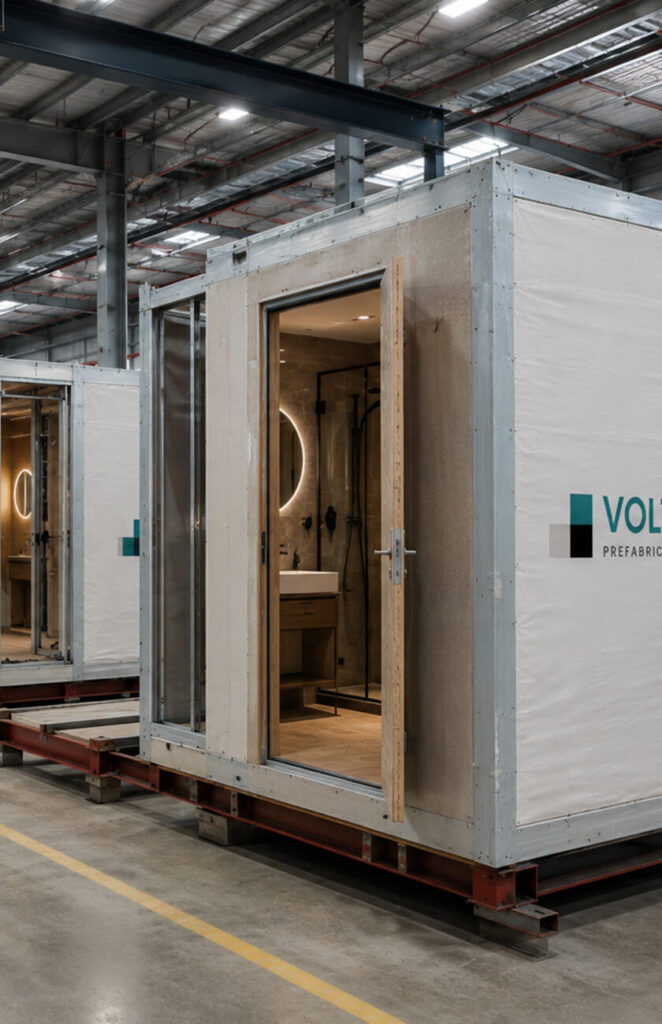
Another important consideration is resource efficiency. Prefabrication can optimise the use of materials, labour and manufacturing resources while reducing the volume of individual activities required on site. It can also help create a more organised working environment by moving certain construction processes away from increasingly complex and congested project sites. Factory-built pods can bring together elements such as plumbing, electrical services, finishes and fixtures before the unit reaches the project site, reducing the extent of coordination and installation required during the later stages of construction.
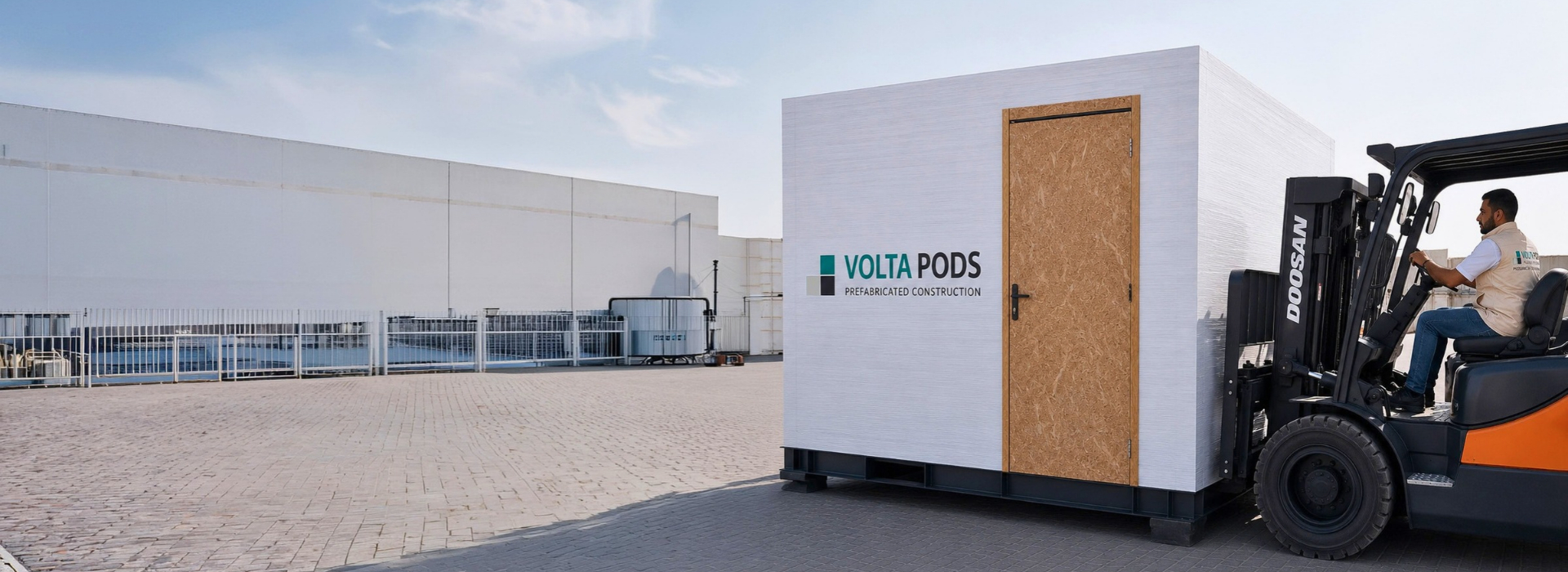
This is where Volta Pods, an ECC Group division, is positioned to support the industry’s growing adoption of modular construction. With prefabricated pod manufacturing capabilities, Volta Pods enables modular units to be produced in a controlled manufacturing environment and integrated into a range of construction applications.
The approach can deliver measurable improvements across different stages of construction. Streamlined manufacturing and improved coordination between off-site and on-site activities can enhance construction productivity by up to 30%, while factory-controlled production and precision-engineered components can contribute to up to an 80% reduction in rework and quality defects. These benefits are supported by structured QA/QC procedures and greater consistency in the manufacturing process.
Modular construction can also contribute to faster project delivery. For bathroom and wet-area works, off-site manufacturing can reduce construction schedules by up to 70%, with the resulting efficiencies potentially helping to shorten overall project timelines by 10–20%. At the same time, shifting key activities from the construction site to a controlled factory environment can reduce on-site labour requirements by up to 40%, while standardised processes can support safer working conditions.
The benefits also extend to resource efficiency. Factory-controlled production can improve material utilisation by up to 70% and reduce construction waste by up to 70%, supporting more efficient use of materials and contributing to more sustainable construction practices.
As the construction industry continues to evolve, modular construction is increasingly becoming part of the conversation around productivity, quality, programme certainty and resource optimisation. Its role is not simply to replace conventional construction methods, but to provide an alternative approach where greater standardisation and off-site manufacturing can add value.
For an industry focused on delivering increasingly complex projects within demanding timelines, the ability to manufacture, coordinate and install construction components more efficiently will remain an important consideration. Modular construction offers one approach to addressing these demands while supporting the industry’s broader shift towards more industrialised methods of construction.